Make arrival a small sequence
When a front door opens directly into the living room, arrival can feel abrupt. Shoes appear beside the sofa, a bag lands on the nearest chair, and letters collect wherever there is a flat surface. The problem is not necessarily a lack of furniture. It is the absence of a clear sequence: open the door, step inside, put things down, and move into the home.
An entryway can be made from a few deliberate decisions rather than a separate room. Think of it as a useful pause. You need a place to stand without obstructing the door, somewhere for the items that arrive with you, and a way to keep those items from spreading. The best arrangement will depend on what your household actually brings through the door each day.
Observe what comes home with you
For several days, notice the objects that cross the threshold. There may be keys, coats, shopping, school bags, cycling equipment, or a walking aid. Some need to stay near the door; others only need a temporary landing place before going elsewhere. Distinguish the two. Designing permanent storage for everything that ever enters the home will quickly overwhelm a small area.
Also notice the order of movement. If someone needs to sit before removing shoes, seating is a priority. If the household carries groceries through to the kitchen, the route matters more than a decorative console. These observations are more useful than starting with a standard entryway checklist. A tray for keys solves very little if the main daily difficulty is nowhere to put a wet coat.
Protect the door and the first step inside
Open the front door fully and examine its swing, handle, lock, and any required access space. Keep furniture, hooks, and stored items out of that area. The entry must remain a reliable route out of the home, not merely an attractive corner. Do not cover safety equipment or interfere with door operation to improve a photograph.
Check the space while carrying something bulky. A shallow shelf that seems unobtrusive may catch a shoulder or a shopping bag. A shoe basket can creep into the walking route as it fills. If someone uses a mobility aid, plan with their actual needs from the beginning. The open floor beside the door is doing useful work even when it contains no furniture at all.
Find the smallest useful landing surface
A landing surface needs to hold the few objects that would otherwise be misplaced. For one household, that may be a narrow ledge and a bowl. For another, it may be a small cabinet with a clear top large enough for a bag. Measure the items, then choose the surface. A deep console is not automatically more helpful than a shallow one.
Position it where it can be reached naturally after the door closes. If it sits beyond the sofa, people may continue using the sofa instead. Wall mounting can release floor space, but the fixing must suit the wall and intended load. Use appropriate professional help where the construction is uncertain. Keep the top intentionally limited. A landing place should help objects continue to their destinations rather than become a permanent archive of receipts.
Decide what remains visible
Open hooks are convenient, yet a dense row of coats can dominate the living room. Closed storage provides visual quiet but requires enough space for doors and comfortable access. Neither is always better. The right balance depends on how many daily items need to be stored and whether everyone will use the proposed arrangement.
A useful compromise is a small number of hooks for current coats and a separate cupboard for less frequently worn ones. Set the number deliberately. If the hooks can hold only the active selection, seasonal items are less likely to accumulate. Fit hooks securely and at accessible heights. Keep heavy bags and protruding hardware away from the door swing and the main passage, especially where a child could bump into them.
Give shoes a boundary
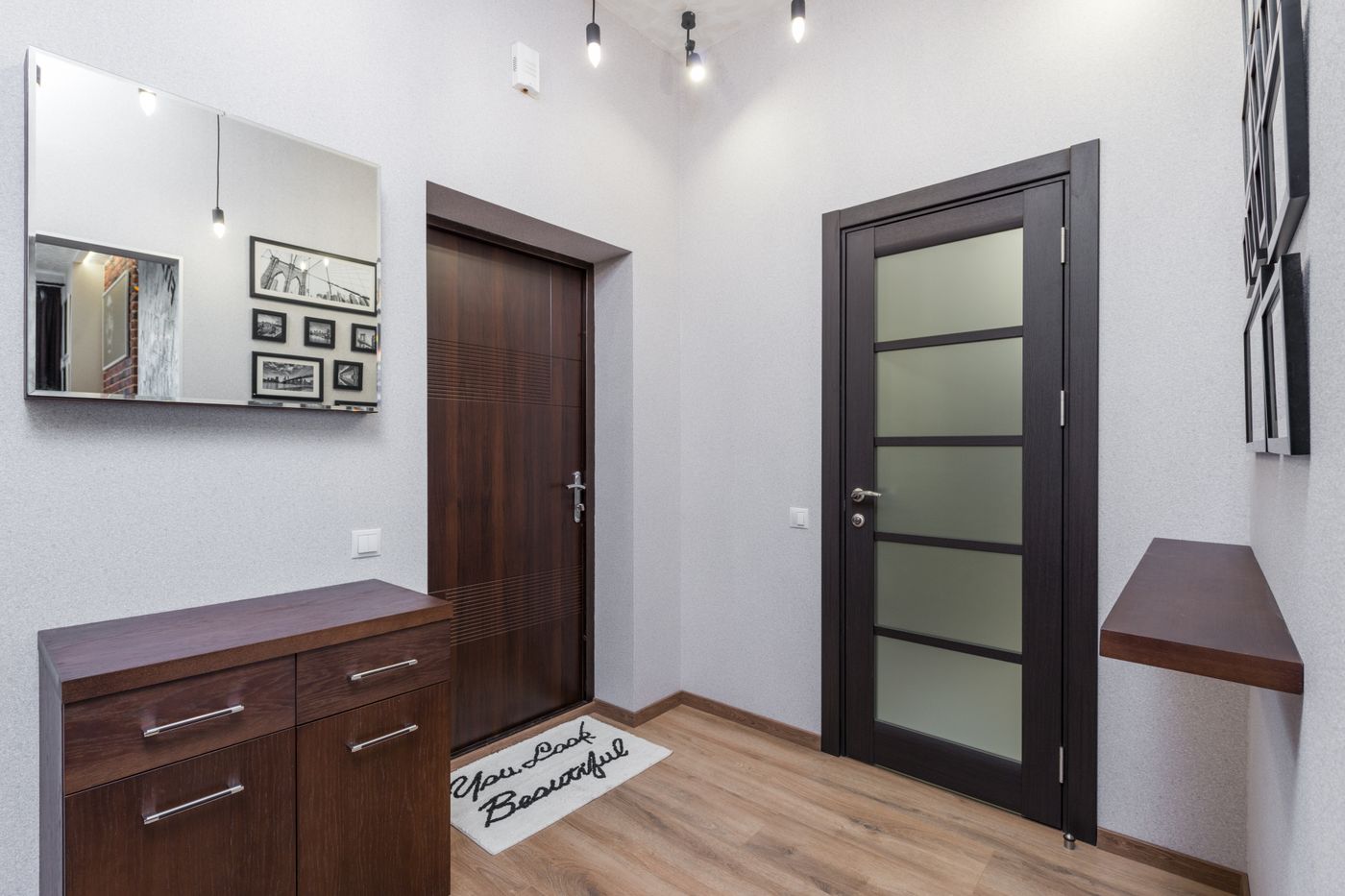
Shoes spread because they are often stored without a clear limit. A mat, tray, or compact cabinet can define their territory. Choose something that fits the footwear actually used, including larger shoes and boots. A shallow rack that holds only small trainers may leave the most awkward items on the floor beside it.
Consider moisture and cleaning. Wet footwear needs an arrangement suited to drying without damaging the floor or furniture. Follow the care instructions for both the storage and the flooring. A closed cabinet may keep shoes out of sight, but ventilation and maintenance still matter. Keep only the current rotation near the door if space is tight. Moving seldom-used pairs elsewhere often creates more useful capacity than buying a larger rack.
Add a seat only when it helps
A bench can make arrival more comfortable, especially for someone who prefers to sit while changing shoes. Its usefulness depends on access. A seat buried beneath bags is no longer a seat, and one squeezed between the door and a cabinet may be difficult to approach. Test sitting down and standing up before deciding the dimensions are adequate.
Look at stability, seat height, and the support available nearby. A low decorative stool may not suit the people who need it most. Storage beneath a bench can be useful, but check whether shoes can be reached without awkward bending. If a permanent bench will obstruct the room, a suitable chair located close by may serve the same purpose. The entryway does not need to contain every function within one tiny rectangle.
Define the zone without closing the room
A change in material can suggest an entry without creating a physical partition. A practical mat, a small patch of wall color, or a compact light can mark the transition. Keep the connection to the rest of the room. Repeating a timber tone or metal finish helps the entry feel intentional rather than like a collection of utility items left at the edge.
Avoid making the zone so emphatic that it visually divides a small living room. A screen or tall cabinet may block useful light and narrow the passage. Before adding one, try the simpler measures first. Often a controlled group of objects, with clear floor around it, communicates the boundary perfectly well. You are giving arrival a place, not recreating a hallway at any cost.
Use a mirror where it earns its place
A mirror can be useful for a final check before leaving, but it should be placed for actual use rather than assumed to be essential. Check its height for the people using it and what appears in the reflection. If it reflects a cluttered storage area, it may make the corner feel busier rather than larger.
Keep heavy mirrors securely fixed according to the wall construction and the product instructions. A casually leaning mirror beside a frequently used door may be unsuitable, particularly around children or pets. A smaller well-positioned mirror can be more practical than a full-length piece in a tight spot. If the best wall is needed for coats, it is reasonable to locate the mirror elsewhere in the home.
Make light useful at the threshold
The entry needs enough light to find keys, read a label, and see the floor clearly. If the living room lighting leaves this corner dim, a suitable additional lamp or professionally installed fitting may help. Consider how the light is controlled when you arrive after dark. A beautiful lamp is less useful if its switch can be reached only after crossing an unlit room.
Keep cords away from the passage and do not improvise permanent wiring. Check glare from the doorway as well as from inside. If a light reflects in a mirror, it can become uncomfortable at precisely the angle used when entering. The lighting can be modest. Its role is to make arrival easy and to allow the entry's practical objects to be seen clearly.
Give paper and parcels a time limit
Mail and deliveries often turn a landing surface into a storage problem. Create a simple rule: one place for new paper, followed by sorting at a predictable moment. Do not rely on a larger tray to solve an undefined process. A bigger container usually allows the same backlog to grow.
Parcels need a temporary place that does not block the door. If deliveries are frequent, decide where boxes go before unpacking and where packaging is collected afterward. Keep personal information on labels out of public view and dispose of it appropriately. The goal is a sequence that finishes. An entryway feels calm when objects have a next destination, not when every object has been hidden in an attractive basket.
Review the arrangement after a wet day
A dry, quiet afternoon is an easy test for an entry. The more revealing moment is an ordinary busy arrival: damp shoes, a coat, several bags, and someone following behind. Check whether the door still closes, whether the floor remains clear, and whether the useful surfaces can be reached. Adjust the layout to the situation that actually happens.
Keep the arrangement small enough to reset quickly. Return coats to their places, empty the paper tray, and remove shoes that no longer belong in the daily rotation. A successful entry without a hallway does not pretend the front door opens somewhere else. It gives the threshold enough care and structure that the room beyond can remain a comfortable place to live.
Take it home
- Observe a week of arrivals before choosing storage.
- Keep the full door swing and exit route clear.
- Limit near-door storage to the items used regularly.