A bedroom should be easy to return to
A calm bedroom is rarely the result of removing every object. An empty room can feel just as unresolved as a crowded one if the light is uncomfortable, the curtains do not provide privacy, or there is nowhere to put tomorrow's clothes. Calm comes from reducing small daily difficulties. The room should support going to bed, getting dressed, and waking up without requiring constant rearrangement.
Layering gives a bedroom depth, but the layers need jobs. A curtain controls light, a bedside lamp supports reading, and a throw adds warmth when the season changes. When these useful elements work together, decoration feels less imposed. Start with what the room needs to do and let its appearance develop from those decisions. This is especially helpful if the existing furniture cannot all be replaced at once.
Settle the bed before choosing the details
The bed usually determines the remaining layout, so begin with its actual dimensions, including the frame and headboard. A mattress measurement alone does not show how much room the furniture occupies. Check whether drawers, doors, and windows can open. Allow for moving around the bed and changing sheets, not merely squeezing into position at night.
Try different positions on paper before assuming the bed belongs opposite the door. A window may create a lovely backdrop but complicate curtain operation or access to ventilation. An internal wall may be quieter but require a different lighting arrangement. Keep radiators, vents, and heating equipment clear according to their instructions. The preferred position is the one that supports the room's ordinary use while respecting these practical limits.
Choose a palette with room to breathe
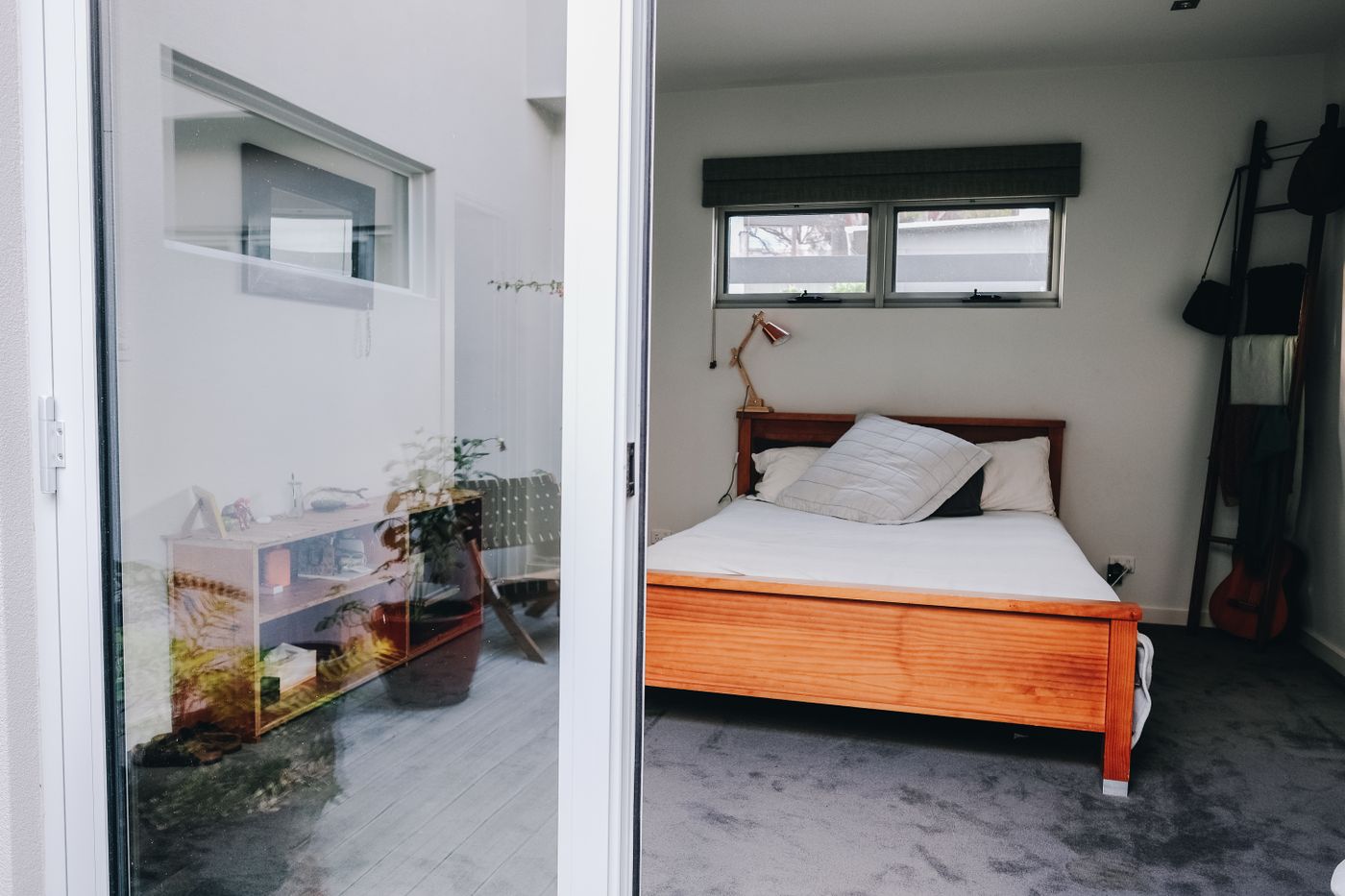
A limited palette does not have to mean all white. It can be a soft green with warm wood and pale bedding, or a deep blue with off-white curtains and a muted patterned quilt. What matters is that the colors have a clear relationship. Start with one surface that will occupy a large part of the room, such as the wall, curtain, or duvet cover, and compare the other materials beside it.
Look at samples in the bedroom rather than trusting a screen. A neutral that appears quiet in a shop may become pink beside an existing oak floor or grey under evening light. Keep the large areas relatively settled and introduce contrast in smaller amounts. A dark lamp base or picture frame can give pale surroundings definition without making the room feel busy. There is no requirement for each object to be a slightly different shade of the same color.
Build the bed from comfort outward
The innermost layers should suit the sleeper before they suit the photograph. Consider whether sheets feel cool or warm, whether the duvet is easy to manage, and whether extra blankets are actually needed. Read care labels before buying. A bedspread that requires inconvenient cleaning may spend most of its life folded in a cupboard.
Once the practical layers are right, add a change in texture rather than more color. Crisp cotton beside a softly woven blanket can provide enough variation. A quilt may supply both pattern and warmth, making several additional cushions unnecessary. Leave enough room to store any layer that comes off at night. A bed should be easy to get into; if clearing it becomes an elaborate ritual, simplify the arrangement.
Give curtains more than a decorative role
Bedroom window treatments need to respond to privacy, daylight, and the way the window operates. A sheer can soften a direct view during the day, but it may not provide privacy after dark when the interior is lit. A denser curtain or suitable blind may be needed as a separate layer. If darkness matters to your sleep, check gaps at the edges rather than assuming an opaque fabric alone will solve the problem.
Measure the intended installation carefully and follow the supplier's fitting guidance. Consider whether curtains will brush a heater, cover a vent, or collect on a damp sill. Keep cords safely managed, particularly in homes with children. If the room is small, a simple treatment that operates reliably can feel more restful than a heavy arrangement with several decorative elements competing for attention.
Make bedside storage honest
List what genuinely needs to stay within reach: a lamp, water, glasses, a book, perhaps a charging device or medication stored appropriately. Then choose a surface and storage arrangement for that list. A tiny table may look light but become permanently crowded. A large chest may hold everything while blocking movement beside the bed. The useful answer often lies between those extremes.
The two sides do not have to match. One person may need a drawer and a generous surface while the other prefers a narrow shelf. Repeating a finish, lamp shape, or approximate height can create visual connection. Check the relationship to the mattress while sitting and lying down. A bedside surface that is awkward to reach will remain irritating even if it looks beautifully aligned when the bed is made.
Use light in small, deliberate pools
Separate the light needed for dressing from the light used before sleep. A ceiling fitting may make clothes easier to see, while a shaded lamp can support a quieter evening. If two people share the room, individual reading lights allow different routines. Test whether the shade hides the bulb from the pillow as well as from the doorway.
Use the controls in the way you will use them at night. Can the lamp be switched off without stretching across a table? Does a charging cable cross the floor? Are small indicator lights distracting in a dark room? Address these details with suitable products and safe cable placement. Fixed electrical alterations belong with a qualified professional. A settled lighting arrangement should make the room easier to use, not introduce another set of objects to navigate.
Let texture do some of the visual work
Texture is especially useful when the palette is restrained. Painted timber, woven fabric, brushed metal, and a softly textured rug can give similar colors different characters. The contrast should be visible without becoming a collection of unrelated samples. Choose a few materials and let them recur in sensible places.
For example, a timber bed and bedside table can share a warm undertone without matching exactly. A plain wool-like rug can sit beneath patterned bedding without adding another motif. Check all materials for care and suitability rather than relying on descriptions such as natural or luxurious. A rough weave that catches skin or a shedding rug near the bed can undo the comfort that the visual texture promised.
Give clothing a place between clean and laundry
Many bedrooms become untidy because they have no destination for clothes that have been worn briefly but are not ready for washing. A chair gradually disappears under them, leaving nowhere to sit. A small rail, a few appropriate hooks, or a dedicated shelf can solve this more effectively than another decorative basket.
Decide how much space the habit actually needs and set a limit. If a hook collection grows until it blocks a wardrobe door, the solution has expanded beyond its purpose. Place a laundry hamper where it can be used without crossing the room, and choose one that can be emptied and cleaned easily. The most restful storage is often ordinary and unremarkable: it quietly prevents a repeated pile from forming.
Keep the floor plan forgiving
A bedroom should still work when a drawer is open or someone is dressing. Check the width of a passage with real movements, including bending, carrying laundry, and pulling out a chair. Avoid using every available strip of floor for furniture. The unused space is part of the room's usefulness.
In a compact bedroom, a wall-mounted reading light or a smaller bedside cabinet may release more space than reducing the bed to an uncomfortable size. A large storage bed can be valuable, but only if its mechanism or drawers are accessible in the intended position. Follow manufacturer instructions and consider the weight and effort involved. Storage that is theoretically generous but difficult to open is unlikely to support an easy routine.
Introduce personal objects selectively
A bedroom can feel personal without displaying every keepsake. Choose objects that you enjoy seeing at the beginning or end of a day: a small painting, a familiar ceramic bowl, a framed photograph. Give them enough clear space to register. A crowded bedside surface makes both the meaningful objects and the practical ones harder to use.
If several things matter equally, rotate them rather than squeezing them together. Consider the sightline from the pillow, which is different from the view at the door. The room does not need to deliver its entire character in one glance. A quietly layered bedroom often reveals itself in small encounters: a fabric that feels pleasant, a lamp that reaches the right spot, a picture placed where it is actually seen.
Finish by removing one unnecessary step
Before calling the room complete, follow the evening routine from start to finish. Put down a book, close the curtain, plug in a device, and turn off the light. Notice what requires moving another object first. Then follow the morning routine. Open the wardrobe, find clothes, and make the bed. These simple rehearsals reveal more than an additional decorative shopping list.
Change one troublesome detail at a time. Move the hamper, remove an unused cushion, or give the current book a dedicated space. Live with the result before adding anything else. The room will feel more composed when its useful layers support one another. Restfulness is not a special finish available only after a full renovation; it can begin with the next ordinary evening becoming slightly easier.
Take it home
- Compare paint and fabric samples in the actual bedroom light.
- Plan somewhere to put bedding layers removed at night.
- Rehearse both the morning and evening routines before buying more storage.