Begin with the meal rather than the accessories
The most useful table setting starts with a simple question: what will people need to eat this meal comfortably? A bowl of soup, a shared pan of pasta and a breakfast of toast ask for different things. Set out the dishes, cutlery and glasses that belong to the meal, then see how much room remains. There is no need to place every piece of a formal service on the table for an ordinary supper. Extra objects can make a small table feel crowded before anyone sits down, and they add clearing and washing without necessarily making the meal feel more generous.
Think about how food will arrive. If serving dishes are placed in the middle, reserve their space from the start. If plates are filled in the kitchen, the table can remain simpler. Consider water, condiments and anything that will be passed between people. Put frequently used items within comfortable reach rather than arranging them only for symmetry. A table that functions smoothly feels welcoming because people can settle into the meal without negotiating an obstacle course. The decorative layer is most convincing when it sits around that practical structure instead of competing with the food for the available surface.
Give each person a comfortable footprint
Place the actual chairs around the table and test the setting from a seated position. Wide chair arms, a thick table edge or a central pedestal can affect comfort even when the tabletop appears large enough. Look at elbow room and the space needed to move a glass without bumping a neighbor's hand. A generous-looking charger plate may consume useful space on a compact table. If a place mat forces the glass into the next setting or hangs over an edge, choose a smaller one or a different way to protect the surface. The objects should fit the table you own.
For a narrow rectangular table, a row of individual low objects down the center can leave more useful room than a broad arrangement. A round table may work better with one compact central piece, provided shared dishes still fit. Neither shape needs to imitate the setting of a larger dining room. If guests create a tighter arrangement, reduce accessories before reducing comfort. Use a side surface for extra plates or serving pieces when available, while keeping routes clear. The table should make it easy to eat and talk, not require people to hold their belongings because every useful patch of surface has been decorated.
Choose a base that suits the surface and the routine
A tablecloth changes the feel of a room immediately, but it also changes the maintenance routine. Check the fabric's washing and drying instructions, its fit and how it behaves when chairs are pulled in. A generous overhang can look relaxed while catching knees or inviting accidental pulls. On an everyday table, a manageable cloth that can be cleaned as needed is often more enjoyable than a delicate one you are worried about throughout the meal. Choose a color or weave that relates to the room, without assuming a seasonal table needs an entirely new linen collection.
Place mats can be a simpler option, but protection depends on their material and the table manufacturer's care guidance. A thin textile mat is not necessarily protection against heat or moisture, and some backings can affect sensitive finishes. Use suitable trivets for hot dishes and appropriate coasters where needed. A runner adds a central line but may leave most eating positions unprotected, so choose it for appearance rather than assuming it does every job. Bare timber can also make a beautiful base when cared for appropriately. Let the table's finish guide the practical choices, and use fabric where it genuinely helps.
Make mixed dishes look deliberate
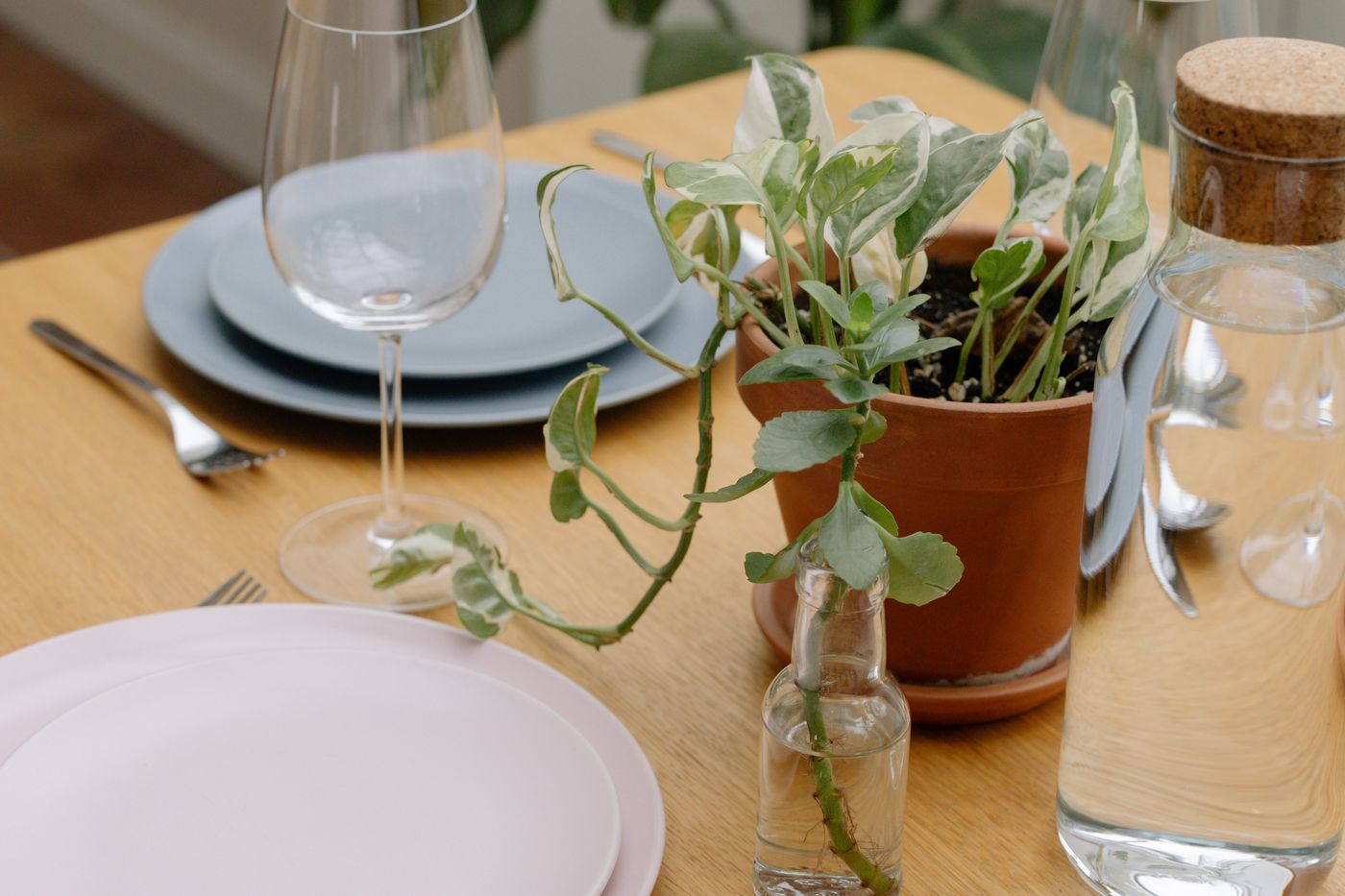
A table does not need a complete matching dinner service to feel coherent. Choose one relationship that holds the pieces together: a shared color family, similar proportions or a repeated plain plate beneath varied bowls. If every element differs in pattern, shape and finish, the setting can become visually noisy. Quiet pieces provide a useful background for more distinctive ones. A favorite handmade bowl can look particularly good beside simple glassware and plain cutlery because its irregularity has room to be noticed. The relationship matters more than whether the pieces came from the same collection.
Check practical compatibility as well as appearance. Bowls should sit securely on the chosen plates, and unusually broad rims should not crowd the place setting. Consider stackability, cupboard space and the manufacturer's dishwasher or microwave guidance before expanding a collection. A small set used often can be more satisfying than several partial services kept for an imagined occasion. If you are buying replacements, take measurements or a representative piece rather than relying on a color name. Slight differences in white can be either appealing or distracting, and seeing the pieces together is more useful than trying to match them from memory.
Let napkins and cutlery be easy to use
A napkin brings softness and gives each place a clear boundary. It does not need an elaborate fold to achieve either. A simple rectangle beside the plate or a loose fold on top is quick to set and easy to undo. Choose a fabric and size that suit ordinary use and a washing routine you can maintain. Textured linen, smooth cotton and blended fabrics have different handling and care requirements; appearance alone will not tell you how they feel or clean. Keep enough in circulation for the household rather than building a large collection of single-use decorative looks.
Set only the cutlery the meal requires, in an order that makes sense for the people at the table and any customs you follow. Everyday comfort matters more than reproducing a formal diagram. A spoon that feels good to hold and a knife suitable for the food contribute more than a row of seldom-used pieces. Keep sharp items appropriate to the household and store them safely after the meal. If the table is small, a simple cutlery-and-napkin arrangement can avoid adding rings, holders or extra dishes. The point is to make the first action at the table effortless, rather than to present a puzzle to unfold.
Keep the center low, modest and removable
A centerpiece should leave people able to see and speak to each other comfortably. A low bowl, a small vase or a single sculptural object can provide enough focus for an everyday table. Check the view from each seat rather than judging only while standing. A tall narrow vase can still interrupt a conversation when it sits directly between two people. Strongly scented flowers or fragranced products may also be unwelcome near food, especially for sensitive guests. You can enjoy the shape of a vessel without filling it, and a bowl used for fruit can be both useful and visually satisfying.
Choose an arrangement that can move easily when the meal needs more space. One compact object is simpler to relocate than a collection spread across the entire center line. If you use a tray, verify that its footprint does not make serving awkward and that it is stable on the chosen cloth or runner. Open flames introduce risks and household considerations; they are not required for a pleasant table. An appropriate small lamp used according to its instructions can give gentle light, or the room's existing lighting may already be sufficient. Leave food room to become the main visual event when it arrives.
Use the room around the table
A table setting is experienced within a room, not against a blank background. The overhead light, a nearby window, the chair upholstery and the wall color all affect how the dishes and linens appear. A table that looks calm in daylight may feel stark under a bright exposed light at night. Use available lighting controls and suitable compatible lamps to create comfortable visibility without making it difficult to see the food. New fixed lighting belongs with a qualified installer. Before buying more table accessories, consider whether the atmosphere is actually being shaped by the room's light and surrounding clutter.
A nearby sideboard can take serving dishes, a water jug or items that are only occasionally needed, provided access remains easy. Clear an appropriate space before the meal rather than balancing things on unrelated objects at the last minute. If the dining table also serves as a desk, create a practical home for work materials so they can be moved without a complicated sorting session. A box or drawer for the current project can make the change from work to eating feel deliberate. That transition often contributes more to the meal than an additional layer of decoration placed around a laptop.
Make the reset part of the pleasure
Everyday tableware earns its place by being pleasant to use repeatedly. After a few meals, notice which pieces are awkward to wash, which glasses feel unstable and which linens spend more time waiting for special care than on the table. Follow product instructions and adjust the collection around what works. Store frequently used dishes at an accessible height, with stacks that are safe to handle. Keep table linens in a clean dry place, and put them away only when properly dry. A setting that looks effortless should also be reasonably effortless to restore.
Leave the cleared table with enough openness for its next use. You may keep one bowl or vase in place, but avoid rebuilding a permanent full setting if the table needs to support other daily activities. A clean surface, a comfortable chair and a few well-chosen objects can make an ordinary meal feel worth pausing for. There is no requirement to make every breakfast an occasion or every supper a display. The table becomes inviting through the ease of gathering around it and the small, repeatable care given to its objects. A useful setting allows that care to remain a pleasure.
Take it home
- Reserve room for serving dishes before decorating.
- Check each place setting while seated in the actual chair.
- Mix tableware through one clear relationship, such as color or scale.
- Choose linens and dishes that fit your normal cleaning routine.