Begin with the window rather than the empty corner
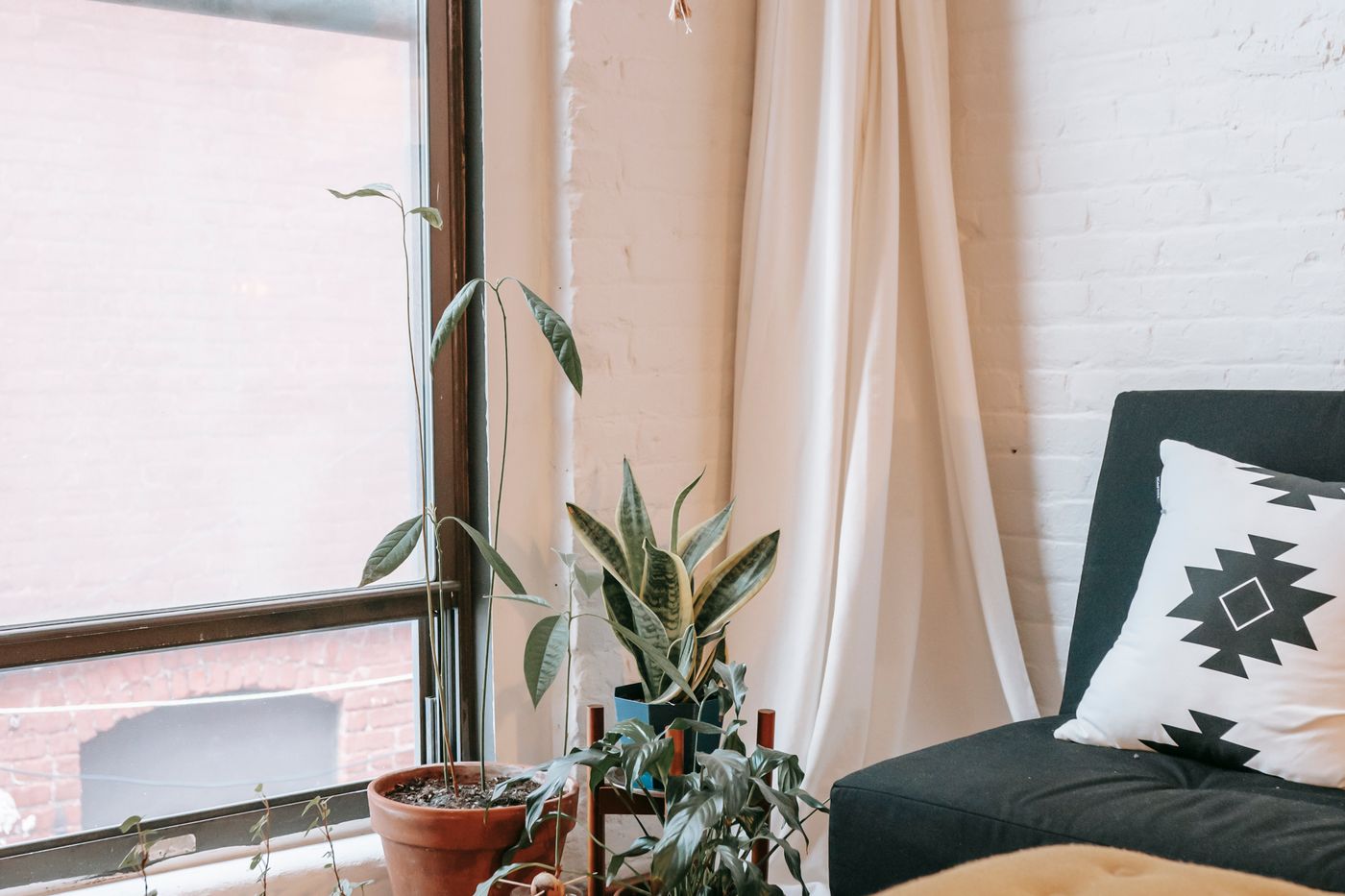
An empty corner can seem to call for a tall plant. It has the right height, the furniture needs a softer outline, and a green silhouette would look lovely against the wall. Those are reasonable decorating observations, but they do not tell you whether a plant can live there. Start by understanding the light that reaches the proposed location. Look at the corner in the morning, around midday and later in the day. Notice direct beams, the brightness beyond them and any obstructions outside. A room can look bright to a person while a position deep inside receives much less useful light.
Window direction is helpful context, but it is not a complete description. Nearby buildings, trees, overhangs, tinted glass and curtains can change the conditions substantially. A south-facing window in one hemisphere does not mean the same thing as the equivalent direction in the other, so general room labels are especially unreliable for an international home. Describe what happens in your actual space instead. When seeking advice at a nursery, a few photographs and observations about direct sun are more useful than saying you need a plant for a living room. The room's name is not the growing condition.
Match a living thing to the available conditions
Once you understand the position, choose a plant whose requirements fit it. Read the plant's care information and confirm the identification rather than relying only on a common name or an attractive display label. Species and cultivars can differ in their preferences. Low-light tolerance means tolerance of reduced light, not an ability to grow indefinitely without an appropriate light source. If the location is genuinely unsuitable, change the decorating idea. A sculptural branch arrangement, a piece of art or a different furniture outline may solve the visual problem without asking a living plant to endure the wrong environment.
Be realistic about care as well as light. Someone who travels regularly may prefer a smaller collection with manageable watering needs. Someone who enjoys checking plants closely may be happy with more demanding specimens. Neither approach is a measure of taste. Avoid buying a plant because it is described as fashionable, indestructible or universally easy; those labels cannot account for your room. A well-matched modest plant will generally contribute more to an interior than a dramatic specimen that struggles in its allotted corner. Healthy growth has a character that cannot be supplied by the pot alone.
Consider the conditions that change after dark
Light is only part of placement. A spot beside a window can also be close to a cold pane, a draft, a heater or an air-conditioning outlet. Observe what happens when the room's systems are running and when curtains are closed. Avoid trapping foliage against glass or placing it where doors repeatedly brush the leaves. Temperature and humidity preferences vary by plant, so use appropriate species-specific guidance rather than applying a single household rule. A bathroom is not automatically a good plant room: it still needs suitable light, and conditions may fluctuate sharply between use and ventilation.
Think through ordinary routines. A kitchen windowsill might provide good light but sit next to cooking heat and splashes. A bedroom corner may become inaccessible when the wardrobe door opens. A hallway plant might be knocked by coats even if its pot fits neatly on the floor. Map these interactions before choosing a large specimen. The best position combines suitable growing conditions with enough separation from daily movement. A plant that needs constant rescue from passing bags or a hot radiator is not in a successful place, however well its foliage balances the furniture in a still photograph.
Give the plant its future footprint
A nursery plant is a starting size, not a permanent object. Ask about its likely growth habit and think about the space the leaves will occupy, not just the width of the pot. An upright plant can fit a narrow position that a spreading one will quickly outgrow. A trailing plant needs a route that does not interfere with drawers, lamps or people moving below it. Check the care guidance before assuming pruning can keep any plant in any size. Some forms tolerate shaping more readily than others, and the result should remain a healthy plant rather than a forced decorative outline.
Use a temporary marker or an empty pot to test the floor footprint before bringing home a large specimen. Walk around it, open nearby doors and sit in the adjacent chair. Picture the mature leaves at shoulder or face height as well as at the base. In a compact living room, one medium plant with room to spread may be more comfortable than a large specimen wedged between the sofa and the curtain. If a plant does outgrow the room, consider a better location or a suitable new home rather than repeatedly moving it into increasingly unsuitable corners.
Make the pot a safe interface with the furniture
The growing pot and the decorative container perform different jobs. The growing system needs to suit the plant, including appropriate drainage and potting material. The outer container can relate to the room, but it must not conceal a persistent pool of water around roots that should not be standing in it. Follow the plant's specific watering advice and empty excess water where required. A removable nursery pot inside a suitable outer pot can make checking easier. Leave enough space to lift it out safely rather than selecting an outer container so tight that routine care becomes a struggle.
Protect the surface below independently. A porous clay container, a cracked glaze or an unnoticed drainage hole can damage timber, books or textiles. Use an appropriate watertight barrier and inspect beneath it regularly; felt pads alone do not stop moisture. Avoid placing pots directly over electrical equipment or on furniture whose finish is vulnerable to water. If a container is heavy when watered, choose a position where it can be handled safely. The pot should feel proportionate to the plant and stable on its support. A narrow pedestal with a broad top-heavy plant can be visually graceful and physically unsuitable.
Group by care needs, then consider appearance
A cluster of plants can read as one substantial element rather than several scattered accessories. It can also simplify checking and care when the plants share compatible requirements. Do not assume that proximity makes their needs identical. Each pot still needs individual attention, and a small pot may dry differently from a larger one beside it. Leave enough space to inspect leaves and reach the compost. Crowding every container into a decorative tray may look tidy while making it difficult to notice pests, fallen leaves or water collecting beneath a pot.
Once the conditions make sense, consider the silhouette. Different leaf shapes can create variety without a collection of competing decorative pots. A taller upright form, a lower spreading form and one quieter small plant may give a group enough range. Keep the bases related through a limited choice of materials or colors if the room is already busy. Avoid arranging by an inflexible rule about the number of plants. Two healthy specimens can form a convincing group; five poorly placed ones do not become balanced simply because the total is odd. Let growth and available space guide the composition.
Treat shelves and hanging positions as installations
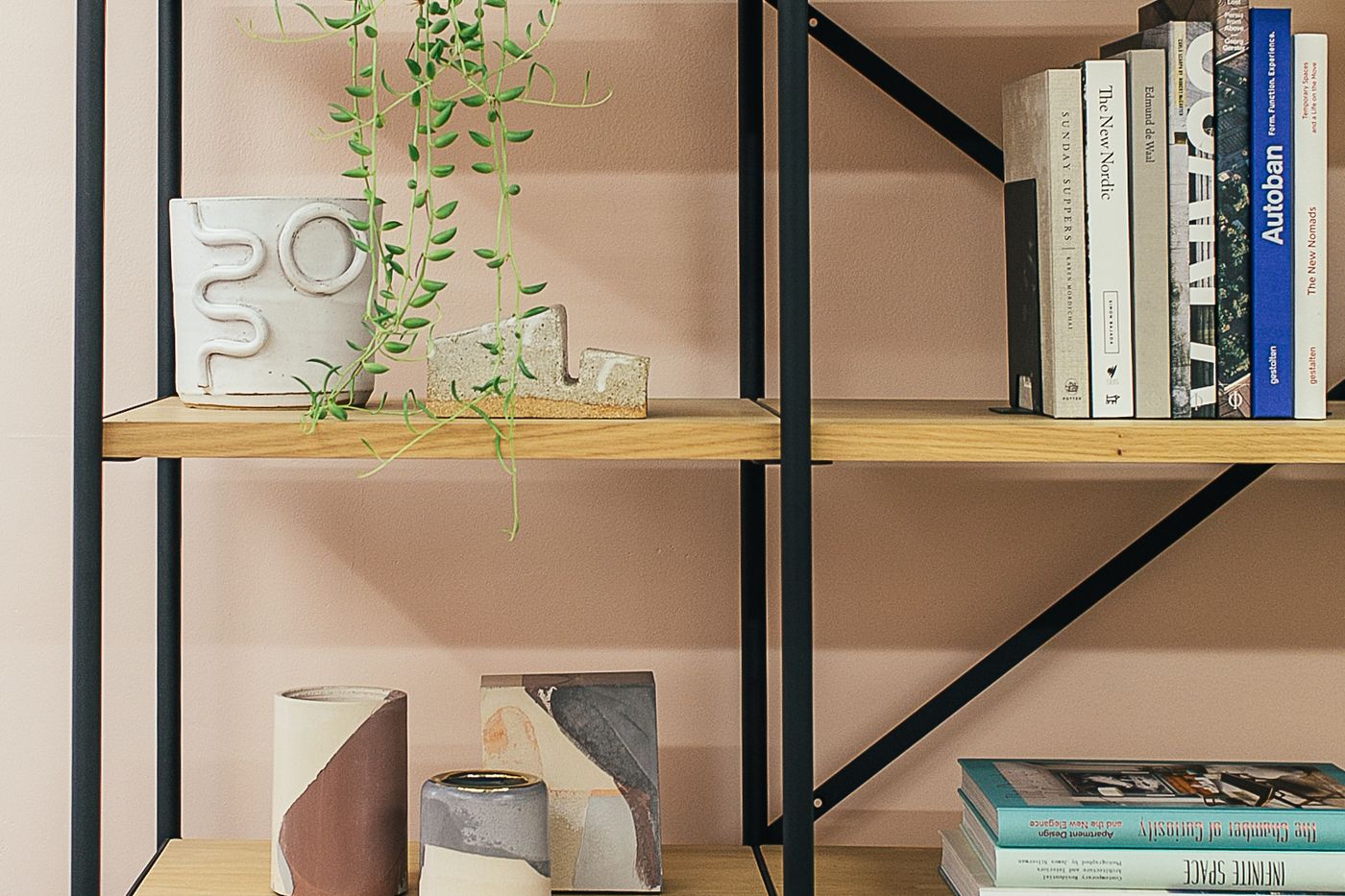
A plant on a shelf adds wet weight and changes access. Check the shelf's rating, its installation and the full weight of the plant, pot and water before using it. Keep trailing growth away from hot lamps and equipment, and ensure the pot cannot be pulled down by passing movement. A high shelf can be awkward to water and inspect, which is a practical reason to choose another location. If you need to move several fragile objects or climb awkwardly every time you care for the plant, the display is not well matched to daily life.
Hanging planters need suitable supports for the actual ceiling or wall and the loaded container. Follow manufacturer instructions and obtain permission where required; uncertain construction or heavy installations warrant professional help. Plan where water will go during watering and how the plant can be removed without strain. Keep suspended containers away from beds, busy routes and positions where falling material could injure someone. These considerations can favor a simpler floor-standing plant or a stable low surface. Height is one way to add interest, but it is not worth an inconvenient or unreliable setup.
Include children, animals and maintenance in the plan
Check the suitability of any plant for the people and animals who use the room. Confirm the exact plant identity with a reliable source, and consult an appropriate professional source for toxicity or allergy concerns. A common name alone may not be enough to identify it. Putting a plant on a slightly higher table does not necessarily make it inaccessible to a climbing child or pet. Consider falling leaves, loose compost, sharp foliage and breakable pots as well as the plant itself. A different species or a different decorative choice may be the most comfortable solution for the household.
Build maintenance into the location. You need to see changes in the leaves, check the growing medium as appropriate and clean the surrounding surface. Keep a simple record of the plant's identity and care instructions, especially when several people share responsibility. Water according to the plant and conditions rather than treating a calendar reminder as an automatic instruction to pour. A reminder can prompt a check, which is a different action. If a plant begins to struggle, review light, watering and other conditions before adding treatments at random. Persistent problems deserve plant-specific advice from a knowledgeable nursery or horticultural source.
Let the arrangement respond to the year
A position that works in one season may change as daylight, heating and shading change. Review the plant's conditions periodically rather than preserving the display at all costs. Some plants may benefit from an adjusted position when light levels fall, but changes should respect their specific needs and avoid abrupt unsuitable exposure. Keep windows reasonably clean and notice when nearby foliage or new furniture blocks light. Treat the arrangement as living rather than fixed. That does not mean moving plants around constantly; it means paying attention when the environment they depend on becomes different.
Finally, judge the room with the plants in their workable positions. You may find that the best growing location is slightly away from the corner you originally wanted to fill. Let the room adapt: move a side table, simplify the neighboring shelf or leave the corner empty. A plant that has space, light and an accessible care routine contributes its own irregularity and presence. It does not need to serve as a perfectly symmetrical finishing object. A successful indoor planting scheme is one in which the room accommodates the plants and the plants remain enjoyable to care for, as well as enjoyable to see.
Take it home
- Observe actual light before choosing a plant.
- Plan for mature foliage and access to doors.
- Keep drainage and furniture protection separate considerations.
- Confirm plant identity and household suitability with reliable sources.