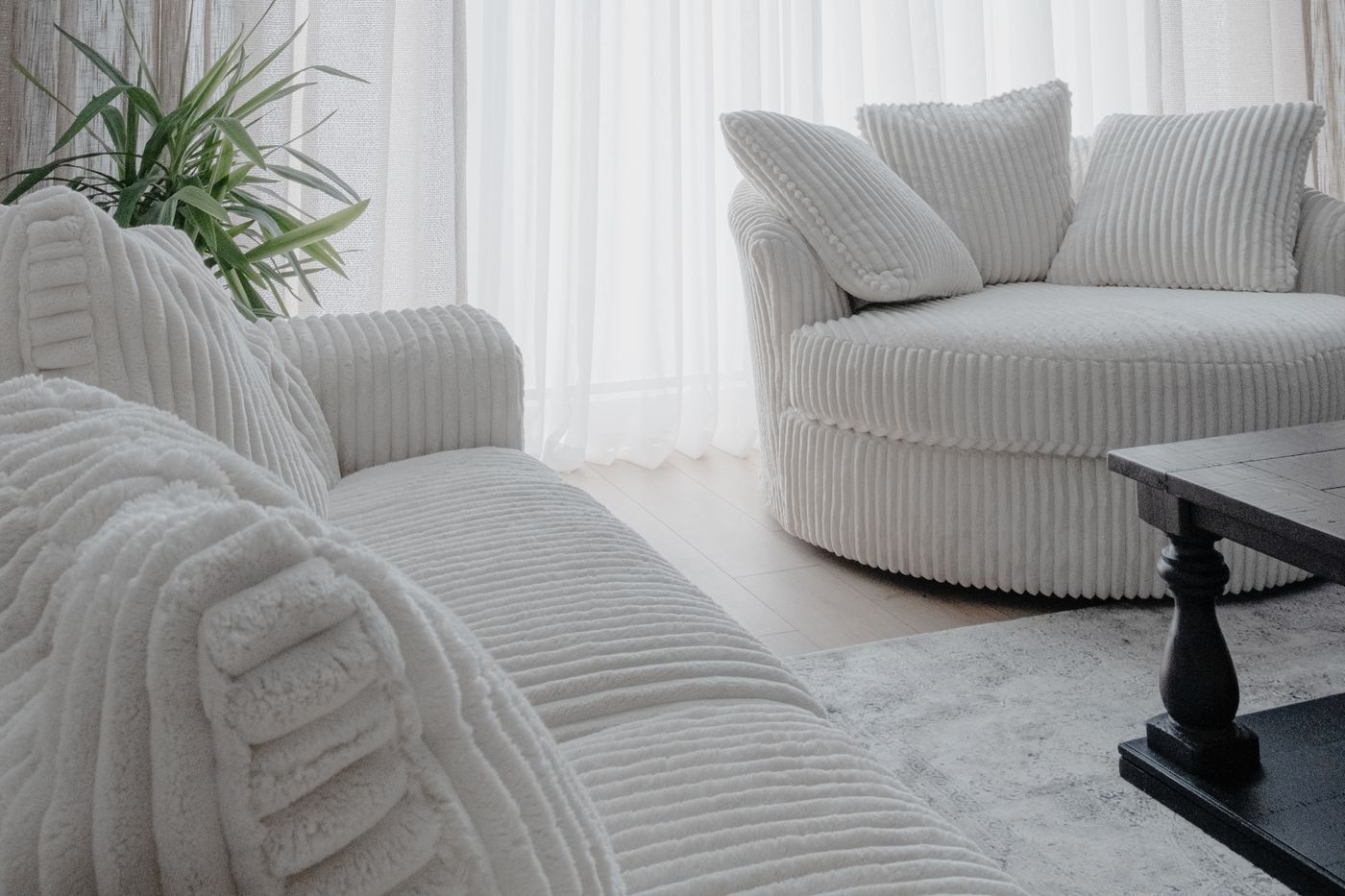

Begin with the window's daily job
Curtains change more than the appearance of a window. They filter morning light, soften a hard wall, provide privacy, and determine how much glass remains uncovered when they are open. Start by observing the window at the hours you use the room. A bedroom facing an early sunrise has a different task from a sitting room overlooked by neighboring windows. Write down the problem in plain language: reduce glare at the desk, preserve daylight while screening the street, or make the room darker for sleep. A fabric description becomes much easier to interpret once the job is clear.
Separate problems that occur at different times. Daytime privacy and nighttime privacy are not the same thing. A sheer that obscures a view into a bright room may offer little protection after sunset when the interior is illuminated. Likewise, a dense curtain that works beautifully at night might make the room feel closed during the day. You may need two independently controlled layers rather than one compromise fabric. Decide whether that complexity is worthwhile before buying a decorative cloth and hoping a lining will make it solve every requirement.
Read the fabric against the light
A curtain sample should be tested vertically at the window. On a shop counter, a pale fabric can look opaque because there is nothing bright behind it. Against daylight, the weave may become much more open. Pin or hold the sample safely where it will hang and look at it from both the room and, where practical, outside. Assess privacy without assuming that the sample's color predicts its transparency. Weave, thickness, finishing, and lining all affect what is visible. A dark open weave may behave very differently from a tightly woven pale cotton.
Repeat the test in the evening with the room lights on. Look for silhouettes as well as clear details, especially in bedrooms and rooms facing close neighbors. If a small sample cannot answer the question, ask the supplier for a larger loan piece or clear product performance information. For room darkening, check how the finished installation deals with light around the top and sides. A fabric described as blackout does not guarantee a completely dark room once it is hung from a pole with open gaps. The complete arrangement determines the result.
Linen brings movement and variation
Linen is often chosen for its irregular texture and the way it falls into soft folds. Those qualities can suit a relaxed room, but they are also reasons to accept some variation. A perfectly crisp hem and an unchanging surface may not be realistic expectations for every linen fabric. Ask about the recommended care method, whether the cloth is preshrunk, and how the supplier handles expected dimensional movement. In a room where the lower edge must sit precisely clear of a radiator or floor obstruction, that information matters more than a romantic description of the material.
A linen blend may offer a different balance between texture, drape, and maintenance. The word blend alone tells you little, so compare samples in person if possible. Fold them over your hand to see whether they hold a sharp crease or relax into a rounded fold. Consider how much texture is already present in the room. A heavily slubbed curtain beside rough plaster, open shelving, and a patterned rug may create more visual activity than you want. A quieter weave can still provide softness without becoming another prominent material statement.
Cotton and other everyday choices
Cotton curtains can feel straightforward and adaptable. Depending on the weave, they may hang neatly, carry printed color clearly, or offer a lighter informal appearance. They can also crease, fade, or shrink under unsuitable care. Read the exact instructions rather than assuming cotton always means machine washable. A lined panel may require a different method from an unlined one, and the lining can limit the whole curtain's care options. Check the instructions for the finished product, including any trims and heading, not just the face fabric sold by the meter.
Synthetic and mixed fiber fabrics deserve the same careful assessment. Some are useful when a more stable shape or simpler maintenance is a priority, but the category does not guarantee either. Feel the cloth, hold it to the light, and inspect how it reflects nearby lamps. A slight sheen that looks elegant in a sample book may become conspicuous across a large window. If the room already contains glossy surfaces, a matte curtain can make the balance calmer. Choose based on the actual fabric's behavior rather than a hierarchy in which one fiber is always considered more refined.
Lining changes the curtain you see
Lining is part of the design, not merely a hidden accessory. It can affect fullness, color, light transmission, and how the fabric falls. A warm toned lining may alter the appearance of a pale face fabric when sunlight passes through it. A heavier lining can give a lightweight cloth more body, while also making the completed panel bulkier when open. Ask to see the proposed layers together. If the supplier offers different lining options, compare the finished sample rather than selecting from labels such as standard, thermal, or blackout without further information.
Do not treat a curtain as a substitute for correcting building defects. Drafts, persistent condensation, and damaged seals need appropriate attention in their own right. Curtains may change comfort near a window, but installation should not obstruct ventilation or conflict with heating equipment. Follow the relevant product instructions and have uncertain conditions assessed by a qualified professional. When planning the stack of fabric at the side, allow the window handles, ventilation openings, and normal cleaning access to remain usable. The curtain should support the room's everyday operation rather than complicate it.
Plan the open position first
The closed curtain usually receives the most attention in photographs, but many curtains spend much of the day open. Think about where the fabric will stack and how much of the glass it will cover. A heavy curtain with generous fullness needs more room at the side than a light panel. If the wall beside the window is short, a large stack can make an already modest window feel narrower. Ask the maker to estimate the stack for the proposed heading and fabric. That is more useful than assuming a pole extended slightly beyond the frame will always be enough.
Choose a heading for how you want to use the curtains. A system that opens smoothly encourages everyday adjustment; a difficult one may stay permanently parked. Consider reach, furniture placement, and whether the fabric can be handled without pulling at a fragile edge. Keep loose cords and loops out of children's reach, use compliant products, and follow the manufacturer's safety instructions. If the installation requires work at height or into an uncertain surface, arrange appropriate professional help. Good appearance should come with a mechanism that is safe and comfortable to operate.
Length belongs to the household
A curtain that gathers on the floor can look generous, but it also gathers dust and can be awkward beside frequently moved furniture. A hem that clears the floor may make more sense where cleaning access, pets, or a busy route matters. Neither option is a universal sign of quality. Decide what the lower edge needs to do in this room. Then measure at several points, because floors and ceilings are not always level. A careful maker will want to know the intended finished position and any irregularities that could affect it.
If curtains sit above furniture or near a heater, follow the equipment manufacturer's clearance requirements rather than copying a decorative arrangement. Do not assume fabric can safely touch a heat source. Check whether a sill, handle, or radiator projection changes the way the curtain falls. These conditions can create an unintended bend or gap even when the measured length seems correct. A simple elevation sketch showing the window, hardware, obstructions, and planned hem helps explain the project clearly to a supplier. It also makes quotations easier to compare because everyone is pricing the same arrangement.
Buy for the room after sunset
Before ordering, bring the final samples into the completed lighting conditions as far as possible. Turn on the lamps you actually use and look at the curtains from the sofa or bed. Warm light may deepen an oatmeal shade or make a cool gray appear less blue; the precise effect depends on the cloth and lamps. Look at the curtain beside wall paint rather than in isolation. If both are pale but carry different undertones, a small mismatch can become more noticeable across a full wall than it was on the sample card.
The best curtain choice is one you can describe in terms of use: it preserves soft daylight, provides the privacy needed after dark, opens without blocking too much glass, and can be cared for sensibly. Once those requirements are met, texture and color become enjoyable decisions instead of attempts to conceal practical compromises. Keep a record of the fabric reference, lining, and finished dimensions. That information is useful for future care, replacement panels, or matching a later addition, and it is far more reliable than trying to remember the fabric from a photograph.
Finally, consider how the curtains will be removed for care. A beautiful heading becomes less appealing if routine cleaning requires a complicated dismantling process. Ask the installer to explain removal and reinstallation, and keep any relevant instructions. Knowing how the finished system works helps prevent damage to the fabric or hardware when the first cleaning day arrives.
Take it home
- Test privacy in daylight and after dark.
- Review the fabric and lining as one finished product.
- Estimate the open curtain stack before selecting hardware.