Begin with what happens beside the bed
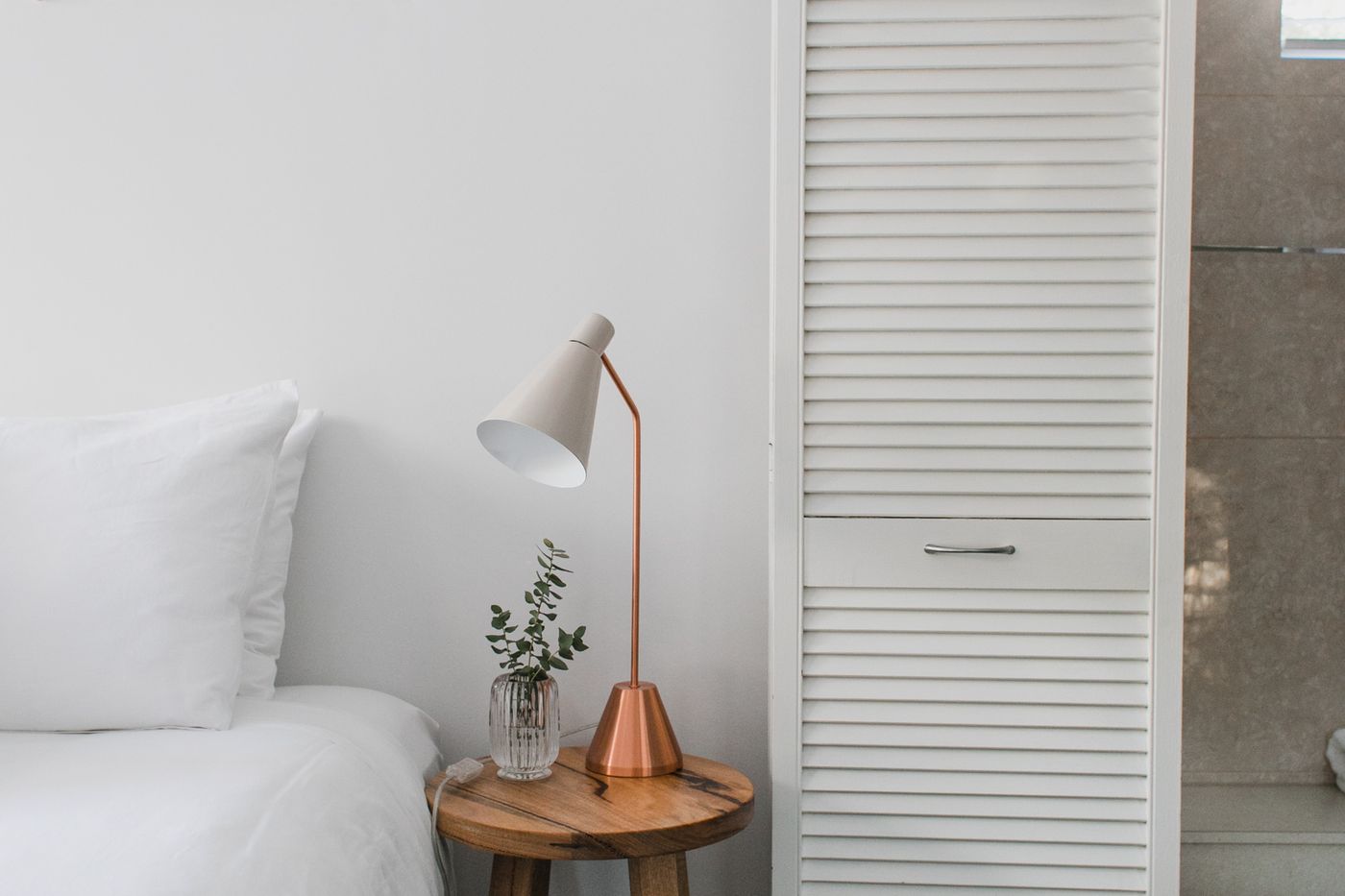
A bedside table is a small piece of furniture with a surprisingly active role. It holds a light, a drink, a book, perhaps glasses or a device. It may also collect the objects that have no clear destination at the end of the day. When the surface is too small or the storage poorly chosen, even a calm bedroom can feel unsettled at its most frequently used corner.
Before shopping, list what you reach for while in bed and what you put down immediately before sleeping. Separate essentials from objects that could live elsewhere. The useful table is not necessarily the one with the most drawers or the most elegant outline. It is the one that supports those repeated actions without making the space beside the bed difficult to enter or clean.
Measure against the mattress in use
The mattress is the practical reference for table height, but its position changes slightly under a person's weight. Sit and lie on the bed, then test where a surface feels comfortable to reach. A table that aligns neatly with an unoccupied mattress may feel low or high once you settle into the bedding.
Include the bed frame, a projecting headboard, and any thick upholstery in the measurement. These can place the table farther from your hand than expected. If trying alternatives, use a stable temporary surface of known height rather than guessing from a photograph. The aim is an easy movement, especially for items used in low light. A visually perfect line is less valuable than being able to put down glasses without searching for the edge.
Give the surface enough useful width
Measure the objects that need to share the top. A lamp with a broad base can consume most of a narrow table, leaving a glass balanced near the edge. A large book may overhang a small shelf. Consider the usable surface after the permanent objects are in place, not just the outer dimensions of the furniture.
Keep some empty space for the unexpected item: a tissue, a second book, or something set down while making the bed. This does not mean choosing the largest table that fits. A deep top can make the back corner hard to reach and occupy floor needed for movement. Look for enough capacity to support the routine comfortably, with the shape and depth suited to the actual gap beside the bed.
Choose storage for named contents
A drawer is useful for small personal items that would otherwise remain visible, but it should have a clear purpose. Check its internal dimensions and how far it opens. A shallow drawer may be ideal for glasses and a notebook while being unsuitable for bulky accessories. A lower shelf can hold current books, although it leaves them on display and may collect dust.
Closed storage can make the bedroom feel quieter, especially when the contents have varied shapes and colors. It can also hide an accumulation that becomes difficult to use. Limit the bedside area to things genuinely needed there. Store medication and other sensitive items appropriately for the household, including the needs of children or visitors. A table is not automatically a suitable place for every object used at night.
Test drawers and doors with the bed in place
A cabinet may fit neatly into the available width while its drawer cannot open past a bed frame. A hinged door may swing into the walking route. Check these movements in the intended position before buying. Include skirting boards and any projection from the headboard, which can affect how closely the table sits to the wall.
Think about access while seated or lying down. A small handle on a low drawer may be awkward to reach, and a door opening toward the bed may require getting up. There is no need for every storage compartment to be reachable from the pillow, but the most frequently used one should be convenient. Furniture that works in a showroom needs to be tested again against the particular shape of your bed.
Let the two sides be different when needed
Matching tables can create a clear, settled composition, but they are not a requirement. Two people may have different storage needs, or the room may offer a different amount of space on each side. Forcing identical pieces into unequal gaps can make one side difficult to use without adding meaningful visual harmony.
Connect different tables through a shared material, similar scale, or related lamp shapes. Check the overall view from the doorway while remembering that each side must work individually. A small chest on one side and a compact open table on the other can feel intentional when both respond to the bed. The objective is a coherent room, not an identical inventory. Practical differences can be part of its character rather than a problem to conceal.
Consider a shelf without assuming it is simpler
A wall-mounted shelf can release floor space and make a tight bedside area feel lighter. It also requires suitable fixing and a clear understanding of the load it will carry. Follow the product instructions and use appropriate help where the wall construction is uncertain. Do not treat the absence of legs as the absence of structural requirements.
Measure its depth and edge position carefully. A shelf can project into the route at an uncomfortable height, especially when moving around the bed in low light. Check that a lamp, book, or glass can sit securely without being easily knocked. If the bed position may change, consider whether a freestanding piece offers useful flexibility. A fixed solution is best chosen after the room's arrangement has proved itself.
Make the lighting relationship comfortable
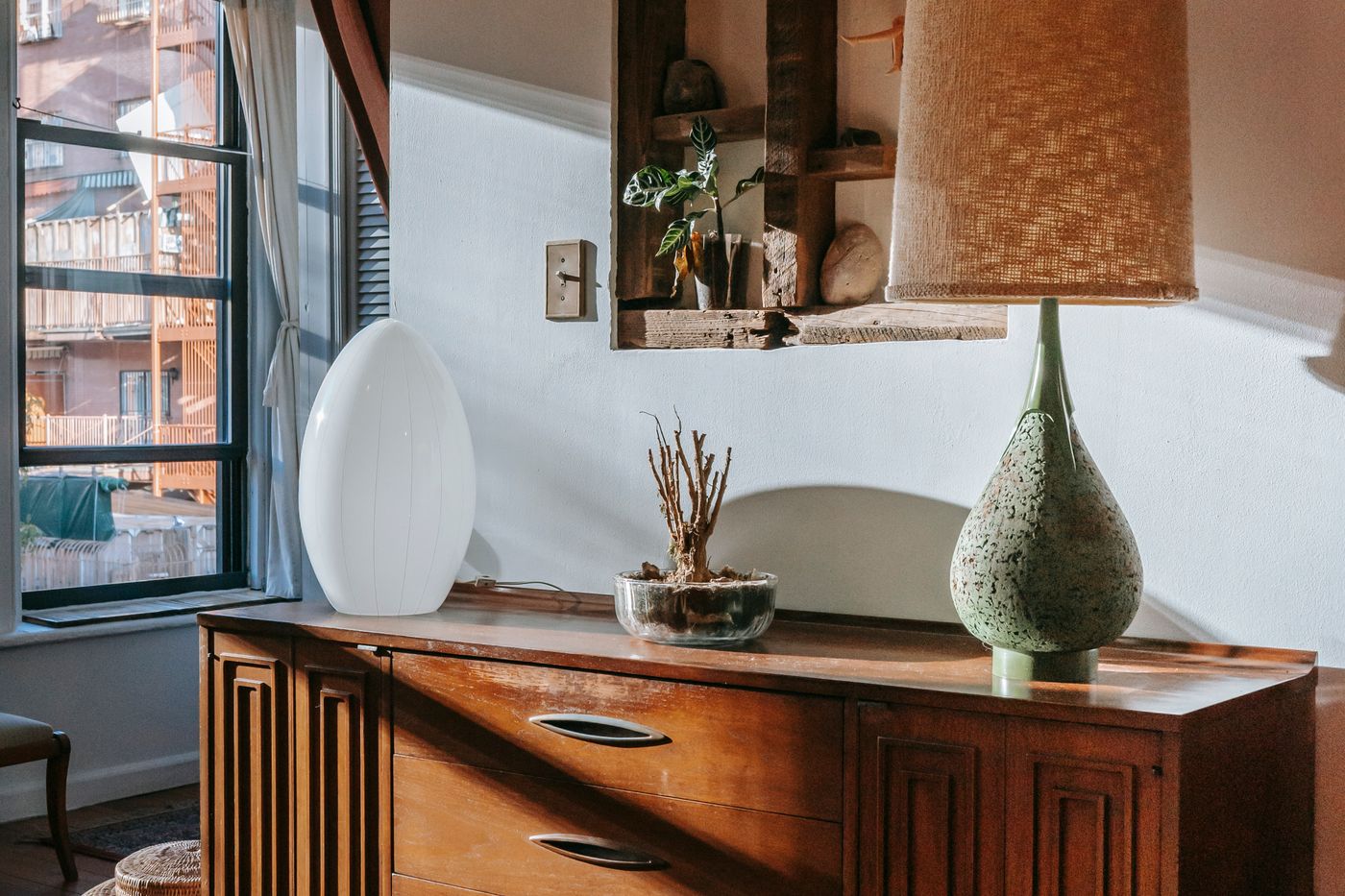
A table lamp should fit both the surface and the view from the bed. Check whether its shade hides the bulb when you are sitting up and lying down. The switch needs to be reachable without stretching across a drink or pulling on the cord. A large decorative lamp may look balanced from the door while leaving very little usable tabletop.
If a wall light is used, the table can be smaller, but the installation and switching still need thought. Use qualified professionals for fixed electrical work. Keep portable lamp cables away from routes and avoid placing them where drawers or bed mechanisms can catch them. Light and table should be considered together because each changes the other's practical requirements. Buying them separately without checking the relationship can create an avoidable compromise.
Plan charging without covering the top
Devices can bring several small accessories into the bedside area. Decide which genuinely need to remain there and where charging can happen safely. Follow the device and charger instructions, keep equipment appropriately ventilated, and do not bury it under bedding. A cable should not cross the walking route or become trapped by furniture.
If the table has built-in charging features, check compatibility, installation guidance, and what happens if the technology becomes unsuitable later. A conventional table with accessible power nearby may be more adaptable. Keep the arrangement easy to inspect and disconnect. The aim is not to make every cable invisible at any cost. It is to prevent the practical equipment from turning the bedside surface into a tangle that must be negotiated before sleep.
Choose a finish you can live with
Bedside surfaces encounter water glasses, cosmetics, books, and regular handling. Read the care guidance for the specific finish. Timber, lacquer, stone, and coated materials vary in how they should be cleaned and protected. Do not assume a material name alone explains its resistance to marks or spills.
A coaster or small tray may help where appropriate, but it should not become a substitute for a finish that suits the routine. Consider edges and stability as well as appearance. A lightweight table that shifts when a drawer opens can be irritating. An unusually heavy piece may complicate cleaning or moving. Choose the combination of material, construction, and care that the household can maintain comfortably, rather than a surface that remains appealing only when nothing is placed on it.
Keep the floor beside the bed useful
The space beside the table needs to support getting into bed, changing sheets, and moving around the room. Check it with drawers open and with any nearby wardrobe in use. A table should not prevent a door from operating or obstruct required access to heating, ventilation, or safety features.
Think about cleaning. A narrow gap beneath a cabinet may collect dust while being difficult to reach. A table on legs can make access easier if the opening is genuinely usable. Avoid filling the remaining floor with baskets and decorative objects unless they have a clear role. A bedroom often feels calmer when the route around the bed remains simple, particularly at night when the room is dim and familiar movements happen without much conscious attention.
Finish with a nightly rehearsal
Set up the table as it will actually be used. Put the lamp, current book, and usual essentials in place. Lie down, reach for the light, and put something on the surface. Open the drawer and get out of bed. These ordinary actions reveal more than an empty product photograph or a carefully styled display.
Remove anything that repeatedly gets in the way. Move less useful objects elsewhere and keep the active surface ready. A bedside table earns its space when it makes the beginning and end of the day easier. It can be a substantial cabinet, a simple timber table, or a carefully installed shelf. What matters is that its proportions and storage agree with the bed, the room, and the person reaching for it in the dark.
Take it home
- Measure the reach from the occupied bed, not just the empty mattress.
- Check drawer and door movement against the bed frame.
- Leave usable surface after the lamp and permanent objects are placed.